 Facebook
 X
X
 Pinterest
 Copy Link

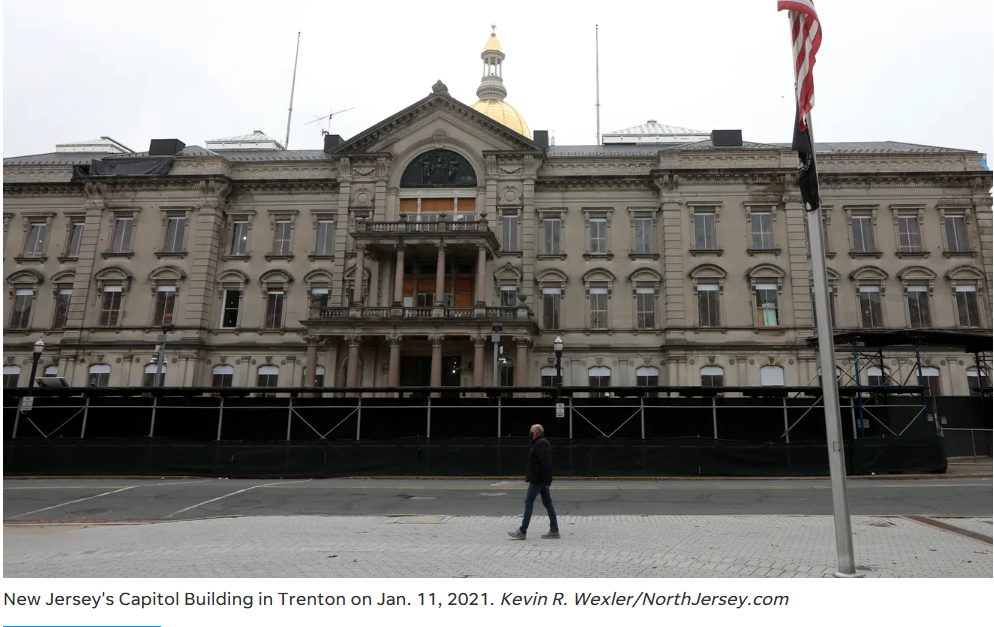 Curtesy of northjersey.com article written by David M Zimmer and Philip DeVencentis,
titled What your money pays for
We sometimes refer to taxes as “part of life” and “there’s no getting away from it”. Although we often ponder what and where all of this money goes, we don’t really know when asked directly, as every town is different and the breakdown may change from year to year, making it hard to keep up.
Here is an interesting article I read in northjersey.com and I thought you may like to read it. It highlights WAYNE New Jersey as an example.
NJ taxes among nation’s highest. What your money pays for
David M. ZimmerPhilip DeVencentis
- Employee benefits, health care, and debt service are significant, less visible costs driving high taxes at the local, county, and state levels.
- New Jersey’s tradition of “home rule” contributes to high costs by replicating services across 564 municipalities and hundreds of school districts.
For many New Jersey homeowners, their most expensive bill each year may no longer be the mortgage.
It is the property tax bill, which in 2025 averaged more than $10,500 statewide and runs far higher in many North Jersey communities.
The bill is only one piece of the tax burden, but it is the one homeowners see most clearly. In New Jersey, property taxes are divided among schools, municipal government and counties, while state income and sales taxes help pay for school aid, health care, pensions and property tax relief.

Together, those layers help explain why residents pay so much, and where the money actually goes.
In Wayne, a high-earning suburb in the heart of North Jersey, the average property tax bill topped $13,867 in 2025.
That is more than $1,150 a month, the equivalent of a second mortgage.
It is the kind of number that stops people at the kitchen counter. The kind of number that immediately turns into arithmetic and raises the question: Where is all of this money actually going?
Story continues below photo gallery.
The answer, in New Jersey, is rooted in both what residents expect and how the state pays for it.
“The level of municipal services and school quality that New Jerseyans expect and want from their communities requires taxation,” said Peter Chen, a senior policy analyst at New Jersey Policy Perspective. “We have chosen property tax as the way that we raise most of that revenue.”
We break down New Jersey’s property tax
Property tax is typically divided into just three slices. Statewide, roughly 52 cents of every property-tax dollar went to schools in 2025, according to data maintained by the New Jersey Department of Community Affairs. Dozens of towns had a far higher share. At least 79 municipalities devoted two-thirds or more of their property tax revenue to local schools that year, records show.

In Tenafly, the average property tax bill was $25,123 in 2025. In Demarest, it was $26,108. In Mountain Lakes, it was $24,089. In Teterboro, which has virtually no residents and a lucrative airport, property tax bills average $1,985.
Wayne was closer to the average, with $7,715 going to schools, $3,258 staying with the township government, and the remaining $2,894 going to Passaic County, according to the state data.
One municipality’s tax picture
Broken into monthly terms, the Wayne tax bill works out to roughly:
- $643 a month for schools
- $272 a month for township services
- $241 a month for county government
A look inside the Wayne K-12 public school district’s budget, which serves about 7,600 students, shows why the school district will continue to dominate.
The $213.9 million school budget for 2026-27 includes $52.3 million for regular instructional programs, the classroom cost many homeowners may associate most directly with the school portion of the property tax bill. Special education instruction adds $18.5 million, operations and maintenance of school buildings totals $17.4 million and transportation accounts for $8.9 million.
But for the first time, the largest single line in the budget is employee benefits.
Wayne’s Board of Education budgeted $58.7 million for benefits for the 2026-27 school year. The cost is driving much of the increase facing taxpayers.
Wayne’s school tax levy is rising from $176 million in 2025-26 to $190.1 million in 2026-27, a jump of about $14.1 million. The district’s health benefit costs are rising by $13.7 million, almost the same amount.

The increase goes well beyond the state’s regular 2% cap on school tax levy growth. School board president Donald Pavlak Jr. said the 2% increase, which amounted to about $3.5 million for the 2026-27 school year, does not cover cost-of-living increases.
“We certainly can’t put additions on schools with a 2% cap,” said Pavlak.
The district, like many around the state, used a so-called “allowable adjustment” to account for the surge in health care benefits coming in 2026-27.
For a typical property owner with a township home assessed at $231,655, the district estimated the annual school-tax increase at $296. Because health benefits account for about 97% of the school levy increase, they represent roughly $288 of the estimated increase, or about $24 a month.
“These budget issues aren’t going away,” Pavlak said. “Every board will deal with the same financial pressures again next year, and the year after that, unless the state of New Jersey gets their act together.”
Chen said school districts are facing the same rising costs households see, only at a much larger scale.
“If you think your power bill is high, the school’s power bill is up too,” Chen said.
The same pressures show up at town hall.
Wayne’s municipal budget for 2026 is set to rise to $104.75 million, up from $101.9 million the year before.
The budget includes $34.9 million for salaries and wages and $44.9 million for other operating expenses, the broad categories that cover many of the services residents see most directly: police and fire protection, public works, sanitation, snow removal, parks and administration.
Another $8.3 million goes to debt service, paying principal and interest on borrowing already on the books.
Mayor Christopher Vergano, who prepares the municipal budget with assistance from the business administrator, said the township continues to face inflation and mounting costs outside its control. Expenses for health care benefits, state pension contributions and workers’ compensation insurance consume a third of the budget. To balance those costs, taxes must go up.

For no tax increase, Vergano said, the township would have had to cut $4 million from the budget.
“That would be the two police officers we just hired,” he said. “That would be devastating to the Department of Public Works, and it would be devastating to town hall. We’re just at a point where there’s nothing left to cut.”
A typical homeowner will pay $203 more in municipal taxes next year, the largest increase in two decades. Vergano acknowledged the impact was unpalatable, but said it equates to less than $20 per month, or as he pointed out, one or two coffee runs.
“I know that’s easy for me to say,” Vergano said, “but we pay taxes just like you pay taxes.”
More taxes at the county level
The county layer widens the picture again.
Passaic County, one of the 21 counties in the state, has a total 2026 budget of $507.8 million, including $86.2 million for employee health insurance and another $43.36 million for debt service. Together, those two lines alone consume nearly one-quarter of the county budget, before accounting for courts, county roads, sheriff operations, social services, county college, vocational schools, and support for the county-owned Preakness Healthcare Center.
Counties also pay for services many residents may not immediately associate with county government, said John Donnadio, executive director of the New Jersey Association of Counties.
Those include human services programs, county colleges, vocational schools, bridges, jails, parks, libraries, elections, probate, public health and, in many counties, 911 dispatch.
“Most people don’t realize that these services are delivered by county government,” Donnadio said.

Some towns tell a different story
The same layers exist across New Jersey, but the cost does not land the same way in every town.
The difference is not simply home values. It is also what else is available to tax.
Towns with office parks, warehouses, industrial properties and other major commercial ratables can spread the cost beyond homeowners. Towns built mostly around houses have less room to do that.
Chen said changes in the tax base can shift who pays without changing what a town needs to raise.
A reassessment, a new development, new warehouses, or a payment-in-lieu-of-tax agreement can change how the levy is distributed, he said. But the overall levy remains tied to what the local government needs to function.
When a commercial property loses value, sits vacant or wins a tax appeal, the town’s expenses do not disappear. Schools still open. Police still patrol. Roads still need work. County taxes still come due.
The cost remains — the burden shifts.
That is one reason neighboring towns can produce dramatically different bills despite being only a few miles apart.
The other is New Jersey’s local structure itself.
Is the answer shared services?
Local control is central to how communities in New Jersey define themselves. It is also expensive, with separate police departments, separate public works fleets, separate school administrations and separate legal and finance structures, often led by well-compensated public officials.
With 21 counties, 564 municipalities and nearly 600 public school districts, “you’re delivering similar services across many separate systems,” Chen said.

The Sherrill administration’s proposed budget nods at that cost through shared-services funding, including a $1 million increase for the Local Efficiency Achievement Program, bringing total support to $3 million. According to the administration, local governments have saved $3,000 for every $1,000 awarded through the program.
But shared services only go so far.
Is NJ’s tax structure the problem?
New Jersey’s bigger answer to the property tax problem has long run through the state budget.
Money raised through paychecks, purchases, business taxes and other statewide revenue streams is sent back to schools, towns and taxpayers to reduce what local property taxes would otherwise have to cover.
“The state income tax exists to offset those costs that property taxes would have had to pay for at the local level,” Chen said.
New Jersey’s largest revenue stream is the gross income tax, followed by sales taxes, corporate and business taxes, fuel taxes, fees and other dedicated revenues. Together, those sources fund the state’s $60.7 billion proposed fiscal 2027 budget.
The two systems hit households differently. New Jersey’s income tax is progressive, meaning higher earners pay a larger share of what flows through Trenton. Property taxes work differently. They are tied to the value of a home, not directly to income, and they arrive as one visible local bill.
Renters do not see that bill in the same way, but they can still feel it through monthly housing costs when landlords pass along property-tax expenses.
New Jersey’s budget breakdown
The proposed state budget shows how much of that money is already committed.
For every $1 New Jersey spends, roughly 23 cents goes to K-12 school aid, including the school funding formula and preschool education aid, state budget records show. Another 12 cents goes to NJ FamilyCare, the state’s Medicaid program. About 10 cents goes to the state pension contribution, 7 cents to debt service, 6 cents to direct property tax relief and 3 cents to municipal aid.

The largest single line is the $12.43 billion K-12 funding formula, the main way state tax dollars flow back to school districts. The budget also projects approximately $7.6 billion in health benefit payments for certain active and retired enrollees.
Those commitments help explain why the state-side tax burden can feel difficult to reduce.
Gov. Mikie Sherrill has framed the proposed state spending plan as “an affordability budget,” centered on school aid, tax relief and what the administration describes as the first full pension payment in the first year of a new administration in decades.
For homeowners, the practical question is how much of that state spending actually softens the local bill.
In Wayne, the advertised 2026-27 school budget includes about $18.1 million in state revenues, compared with a $190.1 million local tax levy.
That money is raised primarily through income taxes, sales taxes and other statewide revenue streams, then redistributed through the state’s school-aid formula. But even after that aid is counted, the local property tax levy remains the dominant source of school funding.
That is why some homeowners feel as if they are paying for schools twice: once through the local property tax bill and again through state taxes.

Chen said that is not really how the system works.
“They’re not paying twice,” Chen said. “They’re paying for the overall funding of societal benefits that benefit everybody.”
Can New Jersey cut taxes?
For homeowners staring at a five-figure property tax bill, the instinctive question is what, exactly, can be reduced.
At the state level, much of the money is already committed. Health care and social services consume more than a third of the proposed $60.7 billion budget. Debt service accounts for $3.2 billion, while projected health benefit payments for certain active and retired enrollees are expected to reach $7.6 billion, up 10% from the prior fiscal year and roughly 84% above fiscal 2017 levels.
The local budgets show the same problem in smaller form.
In Wayne, the school budget is shaped by classroom instruction, employee benefits, transportation, special education, building operations and tuition costs outside the district. The township budget is built around salaries, daily operations and debt service. The county budget carries health insurance, debt, courts, roads, sheriff operations, social services and county institutions.
Those are not costs that can be quickly reduced without changing what the government provides.

“There’s not a lot of state government left to cut,” Chen said, noting that much of the budget flows directly to schools, local governments or benefit programs rather than administrative overhead.
That is why New Jersey spends so heavily on relief after the local bill has already been created.
According to the proposed state budget, $28.7 billion, or 47% of all spending, supports direct and indirect property tax relief. That includes school aid, municipal aid, direct taxpayer relief and other money that flows back to local governments, school districts and residents.
Some of that relief arrives through programs residents know by name. The budget includes $3.32 billion in direct property tax relief, including ANCHOR, Stay NJ and the Senior Freeze.
That is the loop built into New Jersey’s tax system.
The state collects billions through income taxes, sales taxes and other revenue streams, then sends billions back out to soften the property tax burden that households feel most directly.
Still, the bill keeps rising.
Legislation proposed to change NJ tax system
The average New Jersey property tax bill remains the highest in the nation and has continued to rise faster than inflation in recent years, climbing roughly 3% in 2024 and nearly 5% in 2025, according to the nonpartisan Tax Foundation, a Washington-based think tank.
There are proposals in Trenton to change pieces of the system.
One proposed constitutional amendment would require that all gross income tax revenue be distributed to school districts on a per-pupil basis. Another bill would require county school officials to develop plans to consolidate districts into regional systems. A separate proposed constitutional amendment would require lawmakers to meet four times a year to vote on property-tax relief bills.
The proposals point toward the same pressure points: school funding, regionalization and more relief. But nothing appears poised to replace New Jersey’s reliance on local property taxes.


Wayne school district budget, 2026-27

Total: $213.9 million
| Category | Amount | Share |
|---|---|---|
| Employee benefits | $58.7M | 27.4% |
| Regular instructional programs | $52.3M | 24.5% |
| Special education instruction | $18.5M | 8.7% |
| Operations and maintenance | $17.4M | 8.1% |
| Out-of-district / other tuition | $11.8M | 5.5% |
| Transportation | $8.9M | 4.2% |
| Administration | $8.8M | 4.1% |
| Student support/guidance/health services | $8.0M | 3.7% |
| Other school costs | $29.5M | 13.8% |
Figures are rounded and grouped from Wayne’s 2026 municipal budget. Department categories generally combine salaries and operating expenses. Insurance, statutory employee costs, debt service, reserve for uncollected taxes and capital improvements are shown separately because they are listed outside individual department lines. Totals may not sum exactly because of rounding.
Wayne municipal budget, 2026
Total: $104.75 million
| Category | Amount | Share |
|---|---|---|
| Insurance, statutory employee costs and other personnel-related costs | $26.6M | 25.4% |
| Public safety | $21.5M | 20.6% |
| Public works, recycling, trash, buildings and utilities | $16.9M | 16.1% |
| Debt service | $8.3M | 7.9% |
| Shared services, grants and other excluded operations | $8.3M | 7.9% |
| Reserve for uncollected taxes | $7.0M | 6.6% |
| Administration, finance, legal, planning and engineering | $6.5M | 6.2% |
| Parks, recreation, health, welfare, animal control and court | $6.7M | 6.4% |
| Capital improvements | $1.0M | 0.9% |
Figures are rounded and grouped from Wayne’s 2026 municipal budget. Department categories combine salaries and operating expenses where possible. Insurance, statutory employee costs, debt service, reserve for uncollected taxes and capital improvements are shown separately because they are listed outside individual department lines. Totals may not sum exactly because of rounding.
Passaic County adopted budget, 2026
Total: $496.3 million
| Category | Amount | Share |
|---|---|---|
| Employee insurance, pensions, Social Security and statutory costs | $161.0M | 32.4% |
| Law enforcement, corrections and emergency services | $106.2M | 21.4% |
| Health care and social services | $77.0M | 15.5% |
| Debt service | $48.8M | 9.8% |
| Buildings, roads, parks, facilities and utilities | $34.4M | 6.9% |
| County college, vocational school and education | $26.8M | 5.4% |
| Administration, elections and constitutional offices | $20.9M | 4.2% |
| State and federal grants / public programs | $13.6M | 2.7% |
| Capital improvements, deferred charges and other small costs | $7.6M | 1.5% |
Figures are rounded and grouped from Passaic County’s adopted 2026 budget. Department categories generally combine salaries and operating expenses. Employee insurance, pensions, Social Security, statutory costs, debt service, capital improvements and deferred charges are shown separately because they are listed outside individual department lines. Some grouped categories reflect judgment calls about where shared costs fit.
I’m always around to discuss real estate with you and what it really costs to own it.


Podcast: Play in new window | Download


